Urbanization Is Reshaping Gut Bacteria Across South Asia
A survey of 575 adults across ten rural and urban communities in India and Sri Lanka found a consistent split: rural gut microbiomes were rich in Holdemanella, a bacterium tied to fiber digestion, while urban microbiomes carried more Megamonas, a genus linked to fat metabolism and obesity. The pattern is striking, but it's a snapshot, not proof that city life causes the shift.
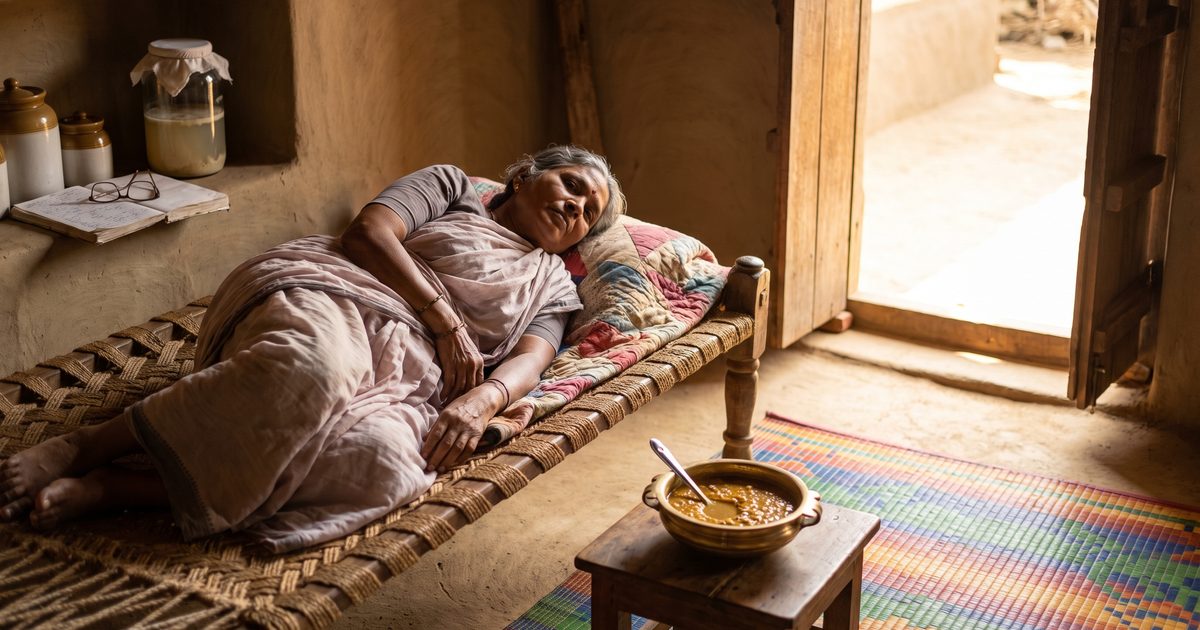
A gut bacterium almost nobody in Western countries carries much of is thriving in rural South Asia, and it's disappearing as people move to cities. A research highlight in Nature India describes a survey of 575 adults across ten communities in India and Sri Lanka that compared rural and urban residents within the same ethnic groups, an attempt to separate the effects of lifestyle from the effects of ancestry on the gut microbiome.
Receive the gift for our readers and continue reading.
Same as you, we're sick of headlines that scream "cure" over a study of 10 mice. So we built a 5-step checklist that catches the tricks: the tiny sample sizes, the exact words researchers use to hide a weak result, all of it.
Rural and Urban South Asians Show Distinct Gut Bacteria Profiles
The core finding is a split. Across the ten communities, gut microbiomes were generally rich in Holdemanella, Ligilactobacillus and Megasphaera, three bacterial families that show up far less in typical Western gut microbiome datasets. Meanwhile Collinsella, a genus common in Western guts, was nearly absent from the South Asian samples overall.
Within that broader pattern, the urban-rural divide was sharp: Holdemanella showed its strongest association with rural lifestyles, while urban environments correlated with more Bifidobacterium and Megamonas. One ethnic group stood out on its own terms. Members of the Pochury community, who eat fermented soybean products, carried notably abundant Bacillus, a signature tied to that specific culinary tradition rather than to urbanization at all.
The underlying paper, published as the South Asian MicroBiome ARray (SAMBAR) study in the journal Gut Microbes, was led by researchers including Maanasa Raghavan and Shreya Ramachandran at the University of Chicago, together with Niraj Rai at the Birbal Sahni Institute of Palaeosciences, according to a University of Chicago Biological Sciences Division release describing the same study. That release adds useful texture: it reports that geography and community affiliation explained more of the variation in gut microbiome composition than urbanization did on its own, and that Bifidobacterium levels correlated specifically with wheat and yogurt consumption, not urban living in the abstract. In other words, "urban" isn't one lifestyle. It's a bundle of dietary and cultural changes that play out differently from one community to the next.
Why the Holdemanella-to-Megamonas Swap Matters for South Asian Health
The bacteria on either side of this divide aren't neutral bystanders. Holdemanella has been linked in prior research to fiber intake and glucose tolerance, and to colorectal-cancer protection. That tracks with what's known about fiber-fermenting gut bacteria more broadly: when they break down fiber, they produce short-chain fatty acids like butyrate, which UCLA Health explains can inhibit the growth of cancerous cells and support apoptosis, the process that clears them out. Megamonas, the genus that rises with urban living in this study, has instead been connected to fat metabolism and obesity.
Collinsella's near-absence from South Asian guts is its own thread worth pulling. It's one of the more consistently discussed genera in Western microbiome research, and it has been tied in other populations to inflammatory and metabolic conditions; a PMC-indexed study on nonalcoholic steatohepatitis describes it as a "proinflammatory genus" that's elevated in that disease. If South Asian guts are moving toward a more Western-style composition as cities grow, the open question is whether Collinsella eventually gains a foothold there too, and whether it carries the same risks in a South Asian dietary and genetic context that it appears to in Western cohorts.
A 575-Person Survey Built to Separate Diet From Ancestry
What makes this dataset useful isn't just its size, it's its design. By sampling rural and urban members of the same ten ethnic communities across India and Sri Lanka rather than comparing unrelated urban and rural populations, the researchers built in a natural control for genetic ancestry. That lets differences in gut bacteria track more plausibly with lifestyle and diet rather than simply reflecting which ethnic group someone belongs to. It's the kind of design choice that matters more than raw sample size for a study trying to isolate one variable, urbanization, from a tangle of others.
What This Study Can't Tell Us Yet
For all that, this is a cross-sectional snapshot: everyone was sampled once, at one point in time, and compared against everyone else. That means the study can show that urban and rural gut microbiomes differ, but it can't show that moving to a city causes those differences, or trace how an individual's microbiome changes as their circumstances change. The available research highlight also doesn't report effect sizes, odds ratios, or p-values, so there's no way yet to say how strong these associations are statistically, only that they're consistent enough across ten separate communities to be noted. No conflicts of interest are disclosed in the material reviewed here.
Tracking How South Asia's Gut Bacteria Keep Changing
The next useful step is longitudinal: following individuals or families as they move from rural to urban settings, rather than comparing separate people at a single moment. That would start to answer whether the urban microbiome pattern seen here is a direct consequence of city living, city diets, or something else entangled with both. For now, SAMBAR gives researchers a rare, community-resolved baseline for South Asian gut microbiomes, exactly the kind of dataset that's been thin outside Western cohorts, and a clear hypothesis for future work to test.